Best Antennas to Improve Your Radio Range
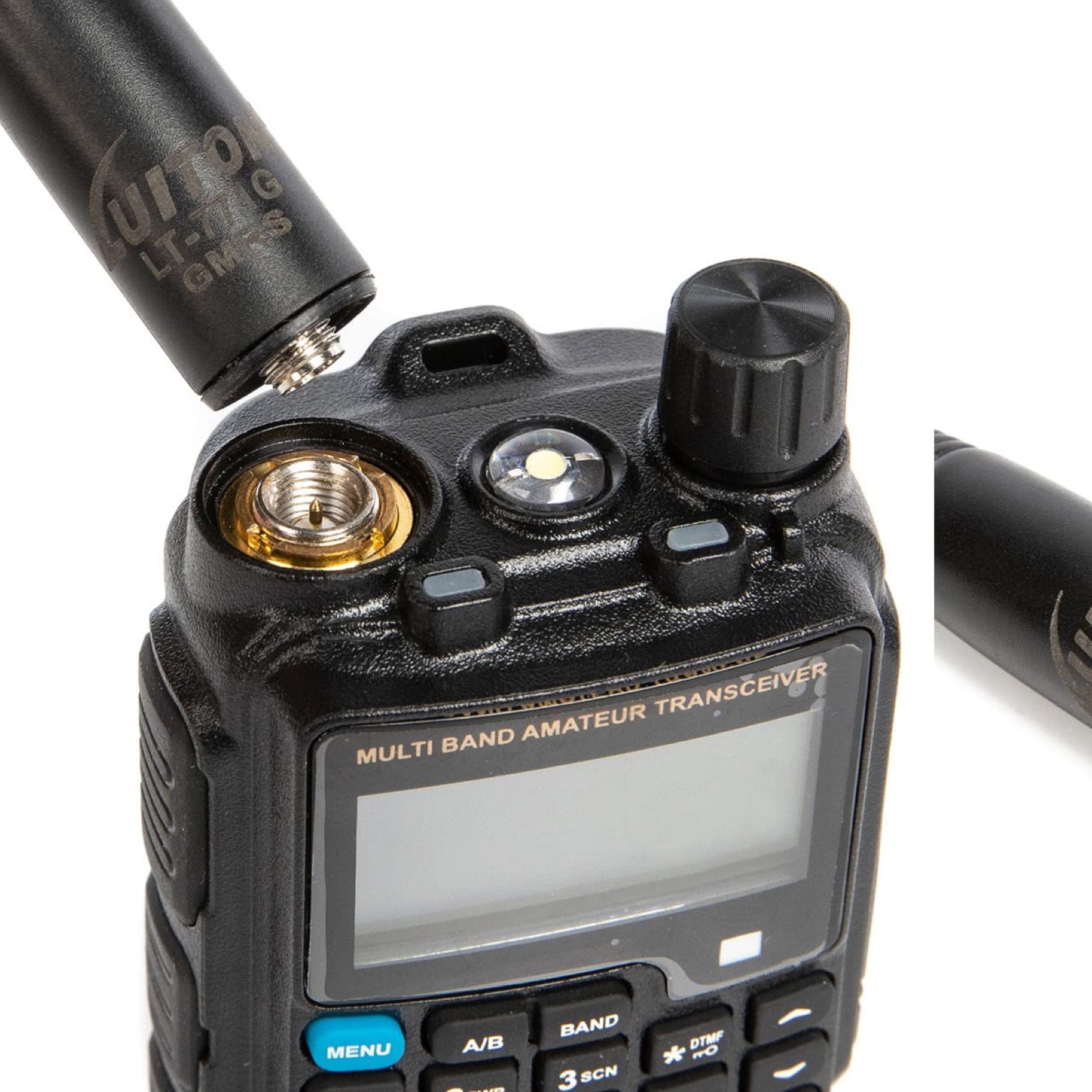
Maximize your emergency communications capability by selecting the right antenna for your specific needs and environment.
Pros
- Significant range improvement over stock antennas
- Various designs for different deployment scenarios
- Many options require no power to operate
- Can be built DIY with basic materials
- Properly matched antennas improve transmitter efficiency
- Directional antennas can reduce interference
- Portable options available for field deployment
Cons
- Larger antennas can be difficult to transport
- Permanent installations may require permits
- Improper installation can damage radio equipment
- Weather exposure requires maintenance
- Optimal height often requires climbing or mounting
- May attract unwanted attention in some scenarios
- Requires basic understanding of radio principles
Specifications
Our Review
Antennas are perhaps the most underappreciated component of any radio communications system. While many preppers focus on radio features and power output, the antenna system often has a far greater impact on effective communication range. A proper antenna can transform a mediocre radio into an exceptional communications tool, while even the most expensive radio will perform poorly with an inadequate antenna.
The fundamental principle behind antenna performance is simple: the more efficiently an antenna can convert your radio's electrical energy into electromagnetic waves (and vice versa for reception), the better your communications will be. This efficiency is primarily determined by the antenna's design, size relative to the wavelength being used, height above ground, and proper impedance matching to your radio.
For emergency communications, we'll focus on four main antenna types: vertical antennas, dipole antennas, Yagi directional antennas, and portable field antennas. Each has distinct advantages for different scenarios, and serious preppers should consider having multiple options available.
Vertical antennas are omnidirectional, meaning they radiate and receive signals equally in all horizontal directions. This makes them excellent general-purpose antennas when you need to communicate with multiple locations. The quarter-wave ground plane vertical is among the most popular designs, offering good performance with a relatively simple construction. For base stations, a vertical mounted as high as possible and clear of obstructions provides excellent coverage. Commercial options like the Diamond X50A (VHF/UHF) or the Cushcraft R9 (HF/VHF/UHF) offer exceptional performance for fixed locations.
Dipole antennas are the simplest effective antenna design—essentially a wire cut to a specific length and fed in the center. Despite their simplicity, properly installed dipoles are highly efficient. The standard half-wavelength dipole is resonant on a single band, but multi-band variants like fan dipoles or OCF (Off-Center Fed) dipoles cover multiple frequency ranges. For HF communications, a simple wire dipole hung between trees at 30+ feet can provide continental and even international range. The Alpha Delta DX-EE is an excellent commercial multi-band HF dipole that covers 40-10 meters in a compact 40-foot span.
When maximum range in a specific direction is required, Yagi directional antennas offer significant gain—effectively concentrating your signal power in one direction rather than radiating it in all directions. A modest 3-element Yagi typically provides 7-9 dBi of gain, effectively multiplying your apparent transmitter power by 5-8 times in the forward direction. For point-to-point communications or reaching distant repeaters, nothing matches the performance of a properly aimed Yagi. The Arrow Antenna 146/437-10BP is a portable VHF/UHF Yagi that breaks down for transport and provides excellent gain for both terrestrial and satellite communications.
For field deployments where portability is essential, several specialized antenna designs offer excellent performance. The roll-up J-pole (often called a 'Slim Jim') can be made from ladder line and rolled up when not in use. The MP1 Super Antenna and Chameleon MPAS Lite are commercial portable antenna systems that pack small but deploy quickly for field operations on multiple bands. For truly minimalist operations, a simple wire thrown over a tree branch and connected to an antenna tuner can work surprisingly well for HF communications.
Antenna height is often more important than antenna type or quality—the old amateur radio adage that 'if you can't put up a good antenna, put up a high one' holds true. Each doubling of antenna height typically provides a 6dB improvement in performance, equivalent to quadrupling your transmitter power. For VHF/UHF operations, getting your antenna above surrounding obstacles is particularly critical as these frequencies primarily operate by line-of-sight.
Feedline quality becomes increasingly important as frequency increases and feedline length grows. For runs over 50 feet, investing in low-loss coaxial cable like LMR-400 or Times Microwave LMR-600 will preserve your signal strength. At VHF/UHF frequencies, the difference between budget RG-58 and quality LMR-400 can be several dB—equivalent to more than doubling your effective transmitter power.
For emergency preparedness, we recommend a layered approach to antenna systems: a permanent, optimized antenna for your home station; a quick-deploy antenna that can be set up in minutes for temporary locations; and an ultra-portable antenna that can be carried in a pack for true field operations. This combination provides the flexibility to communicate effectively regardless of the scenario you face.
Conclusion
The antenna is the most critical and often most overlooked component of any radio communications system. While radios themselves get most of the attention, a well-designed and properly installed antenna system can improve your effective communication range by orders of magnitude. For emergency preparedness, investing in quality antennas and understanding their proper deployment will yield far greater benefits than spending the same amount on higher power transmitters or more feature-rich radios. Whether you're using simple handheld transceivers, mobile radios, or a complete base station, the right antenna will dramatically enhance your ability to communicate when it matters most.
Alternatives to Consider
Ham Radio Comparison
Learn about the different types of radios that can benefit from improved antennas.
Baofeng UV-5R Review
An affordable handheld radio that can benefit significantly from an antenna upgrade.
Yaesu FT-991A Review
A premium all-band transceiver that deserves quality antennas to reach its full potential.