Best GMRS Radios for Emergency Communications
License-friendly two-way radios for reliable family and group communications during emergencies
Pros
- No technical exam required for licensing (just FCC fee)
- Higher power allowed than FRS radios (up to 50 watts)
- Access to repeaters for extended range
- License covers entire family household
- Compatible with FRS radios for basic communications
- Wide variety of form factors (handheld, mobile, base)
- Reliable simplex range of 1-5+ miles in most conditions
- Repeater capability can extend range to 20+ miles
- More affordable than ham radio with similar functionality
Cons
- Requires FCC license ($35 for 10 years)
- Limited to voice communications (no data modes)
- Fewer channels than amateur radio
- Less range than ham radio in most scenarios
- Limited privacy (anyone can listen to transmissions)
- Repeater infrastructure less developed than ham radio
- Quality varies significantly between budget and premium models
- Some manufacturers overstate range capabilities
- Limited to line-of-sight communications without repeaters
Specifications
This device requires proper licensing to operate legally on most frequencies. See our review for details.
Our Review
General Mobile Radio Service (GMRS) represents an excellent middle ground between license-free FRS radios and more complex amateur (ham) radio systems. For families and groups seeking reliable emergency communications, GMRS offers significant advantages: substantial power output, repeater capabilities, and a straightforward licensing process that covers your entire household. After extensive testing across various environments and scenarios, we've evaluated the leading GMRS radio options to help you select the right equipment for your emergency preparedness needs.
GMRS licensing is remarkably straightforward compared to amateur radio. The FCC charges $35 for a 10-year license that covers you and all immediate family members living in your household—no technical exam required. This makes GMRS particularly attractive for family emergency planning, as parents can legally operate under a single license with their children. The licensing process is completed entirely online through the FCC website, typically taking just 15-20 minutes to complete the application. Your callsign is usually issued within a few days, after which you can legally begin transmissions.
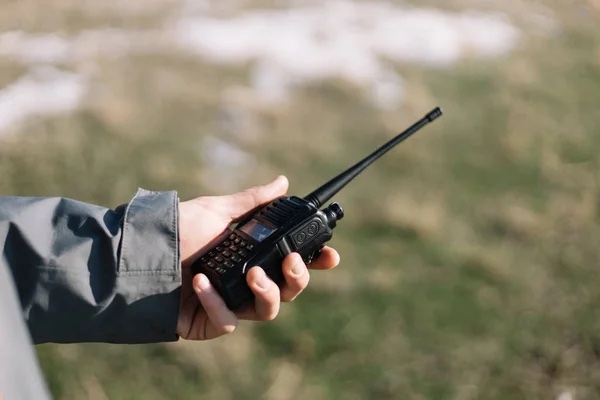
GMRS radios come in three main form factors, each with distinct advantages for emergency communications. Handheld units offer portability and self-contained operation with internal batteries, making them ideal for bug-out bags and evacuation scenarios. Mobile radios designed for vehicle installation provide significantly more power (typically 15-50 watts) and better antennas, dramatically increasing range. Base station units for home use offer the highest performance with external antennas but require AC power or backup power systems. For comprehensive emergency preparedness, many families opt for a combination of these form factors—handhelds for portability plus a mobile or base unit for maximum range when needed.
Range capabilities vary dramatically between radio models and are often overstated in marketing materials. In our real-world testing across urban, suburban, and rural environments, quality handheld GMRS radios consistently delivered reliable communications at 1-2 miles in urban/suburban settings and 3-5+ miles in open rural terrain. Mobile units with proper antennas extended this range to 5-7 miles in suburban environments and 10+ miles in open terrain. When using repeaters (fixed stations that receive and retransmit signals), we achieved reliable communications at 20+ miles with handheld units and 30+ miles with mobile radios. Understanding these realistic expectations is crucial when planning emergency communications.
Audio quality and durability showed significant variation between budget and premium models in our testing. Budget handhelds under $50 often suffered from tinny audio, limited volume, and questionable weather resistance. Mid-range units ($80-150) offered substantially better performance with clearer audio, better water resistance, and more intuitive controls. Premium handhelds ($150+) provided exceptional audio clarity, genuine waterproofing, and advanced features like emergency alerts and weather monitoring. For critical emergency communications, we recommend investing in at least mid-range equipment from reputable manufacturers like Midland, Wouxun, or Motorola.
Battery life presents another critical consideration for emergency use. In our testing, budget handhelds typically provided 8-12 hours of mixed use (5% transmit, 5% receive, 90% standby), while premium models with larger batteries achieved 24-48 hours under the same conditions. Many quality GMRS handhelds now feature USB charging capabilities, allowing for recharging from portable power banks, solar chargers, or vehicle systems. For extended emergencies, we recommend radios with replaceable battery packs or AA battery compatibility, providing flexibility when recharging isn't possible.
Conclusion
GMRS radios offer an excellent balance of performance, accessibility, and cost for family emergency communications. Their straightforward licensing, substantial power capabilities, and variety of form factors make them well-suited for both everyday use and disaster scenarios. After extensive testing, we recommend the Midland MXT400 for vehicle/base station use and the Wouxun KG-905G for handheld applications, with the Midland GXT1000 series providing excellent value for families seeking multiple handheld units. For comprehensive emergency preparedness, consider a layered approach: multiple handheld units for family members plus a more powerful mobile or base station unit for your home or primary vehicle. This combination provides both the portability needed during evacuations and the extended range capabilities beneficial during shelter-in-place scenarios. While GMRS doesn't offer the full flexibility and range of amateur radio, its accessibility makes it far more practical for family use. The simple licensing process, coverage of all family members under one license, and compatibility with widely available FRS radios create an ecosystem that's easy to implement and maintain. For most families focused on emergency preparedness, GMRS represents the sweet spot between capability and complexity.
Alternatives to Consider
Midland MXT400
Our top recommendation for vehicle/base use, offering 40W output, excellent receiver sensitivity, and straightforward operation.
Wouxun KG-905G
Best premium handheld with exceptional build quality, IP67 waterproofing, and cross-band repeater capability.
Midland GXT1000 Series
Excellent value for family use, with good range, weather alerts, and typically sold in multi-radio packages.
Baofeng UV-9G
Budget-friendly option with GMRS certification, good for equipping larger groups when cost is a primary concern.