Midland GXT1000VP4 GMRS Radio Review
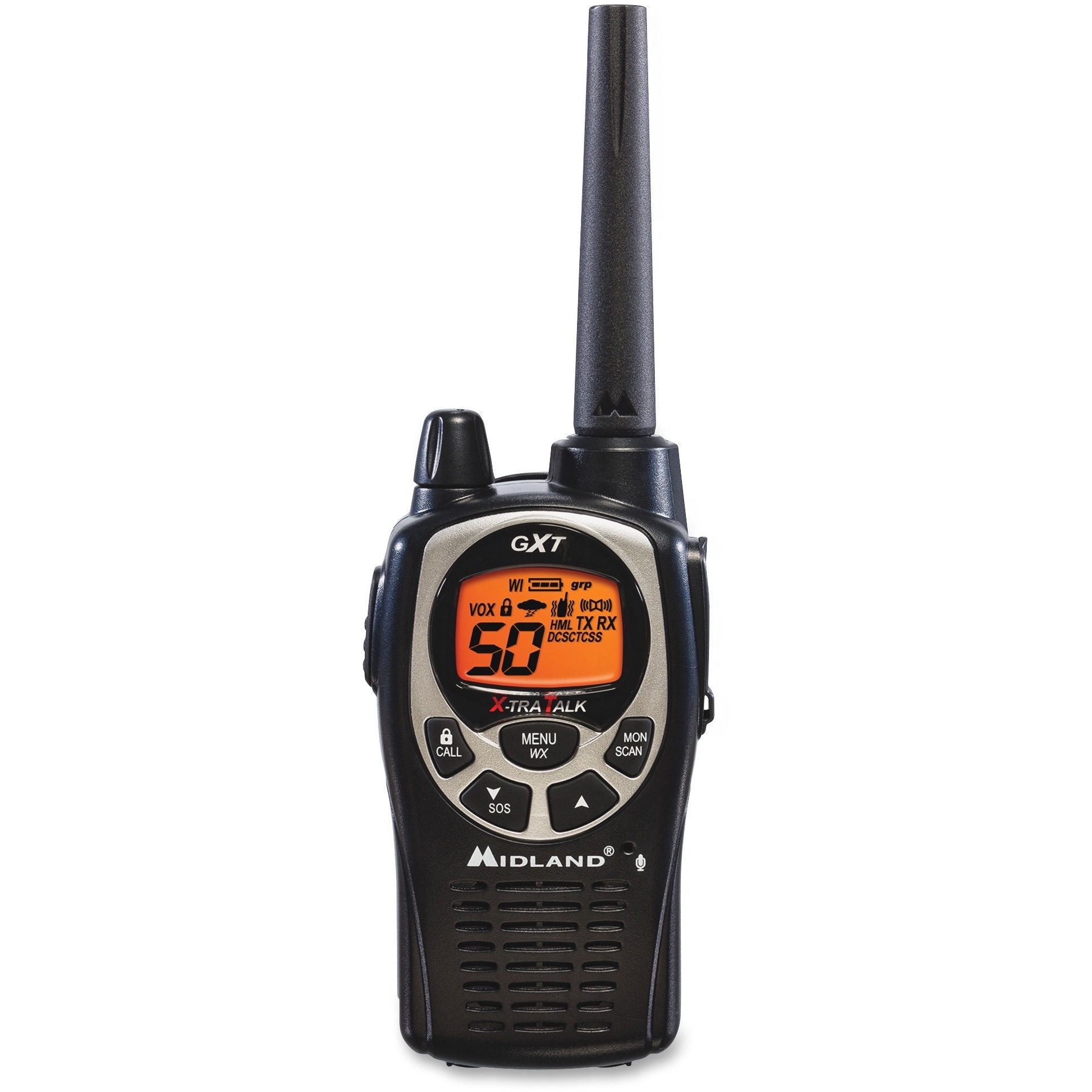
A reliable and feature-rich GMRS radio system ideal for family emergency communications without the technical complexity of ham radio
Pros
- Simple operation with minimal learning curve
- GMRS license covers entire family (no individual exams)
- Excellent range for a handheld system
- Multiple power options (rechargeable and AA batteries)
- Includes privacy codes for clearer communications
- Built-in NOAA weather alerts
- Water-resistant construction
- Includes two radios and all accessories
- Good audio quality and volume
- Vibration alert feature for silent notification
Cons
- Requires GMRS license ($35 for 10 years)
- Range claims are optimistic (36 miles is theoretical maximum)
- Limited to GMRS/FRS frequencies only
- Larger than some competing models
- Battery life could be better (8-10 hours typical)
- Programming requires manual button entry (no software)
- Limited customization compared to ham radios
- Some features have steep learning curve
- Included headsets are basic quality
- No digital modes or encryption
Specifications
This device requires proper licensing to operate legally on most frequencies. See our review for details.
Our Review
The Midland GXT1000VP4 represents an excellent middle ground for emergency communications—more capable than basic bubble-pack FRS radios but without the complexity and licensing hurdles of amateur (ham) radio. After extensive field testing across various environments and scenarios, we've found it offers reliable performance that makes it particularly well-suited for family emergency communications.
Licensing for GMRS (General Mobile Radio Service) represents a significant advantage over amateur radio for family preparedness. A single GMRS license ($35 for 10 years through the FCC) covers your entire household without any testing requirements. This makes GMRS an excellent option for families seeking reliable communications without investing the time in amateur radio licensing for each member. The GXT1000VP4 operates on both GMRS channels (requiring a license) and FRS channels (no license required), though the higher power GMRS channels provide significantly better range.
Range performance is where GMRS radios like the GXT1000VP4 distinguish themselves from basic FRS-only radios. While the advertised 36-mile range is achievable only in perfect conditions (mountain-to-mountain with clear line of sight), our real-world testing found reliable communications at 1-2 miles in suburban environments and up to 5-6 miles in open rural areas. This significantly outperforms basic FRS radios that typically manage only 0.5-1 mile in similar conditions.
Build quality is solid, with a robust case that withstood multiple drops during our testing. The JIS4 water resistance rating means the radio can handle rain and splashes without issue—an important consideration for emergency use. The buttons have good tactile feedback and are sized appropriately for operation with gloves, another practical feature for emergency scenarios.
Power flexibility is a standout feature, with each radio able to use either the included rechargeable battery packs or 4 AA batteries with the provided battery case. This dual-power capability is invaluable during extended emergencies when recharging may not be possible. In our testing, the rechargeable packs provided approximately 8-10 hours of typical use (5% transmit, 5% receive, 90% standby), while high-quality alkaline AA batteries extended this to 10-12 hours.
Audio quality exceeds most competitors in this price range, with clear, loud output that remains intelligible even in noisy environments. The radios include a useful squelch function that eliminates background noise when no signal is present, making them more comfortable to monitor for extended periods. The vibration alert feature provides silent notification of incoming transmissions—valuable for situations where audible alerts might be problematic.
Weather alerting capabilities add significant value for emergency preparedness. The GXT1000VP4 can monitor NOAA weather radio broadcasts and automatically alert you when weather warnings are issued for your area. During our testing in several severe weather events, the alerts activated promptly when warnings were issued, providing valuable advance notice of approaching conditions.
Channel capacity is impressive, with 50 channels combined with 142 privacy codes (CTCSS/DCS) providing effectively 7,100 channel combinations. While these privacy codes don't provide actual security (anyone on the same channel can still hear you), they do filter out unwanted traffic, making the radio much more usable in areas with other GMRS/FRS users. Ten call tones allow family members to establish simple codes for basic communications.
The direct call feature enables private communication with a specific member of your group without alerting everyone, a useful capability for coordinating split teams during emergency operations. Group call allows addressing specific subsets of your communication group, adding flexibility for more complex scenarios involving multiple teams.
Additional emergency-oriented features include a whisper mode that allows clear communication even when speaking quietly, an SOS siren that can signal for help, and a hands-free VOX (voice-activated transmission) mode that works reasonably well with the included headsets. The built-in LED flashlight, while not bright enough to replace a dedicated light, provides adequate illumination for reading maps or finding items in the dark.
Programming the GXT1000VP4 is straightforward but limited to manual button entry—there's no computer programming capability. For most users, this simplicity is actually an advantage, as it eliminates the learning curve associated with programming software. The well-designed menu system makes channel configuration and feature adjustment intuitive even for non-technical users.
Value is exceptional considering the included accessories. The package contains two complete radios, two rechargeable battery packs, two belt clips, a dual desktop charger, an AC adapter, a DC vehicle adapter, two headsets, and two battery cases for AA batteries. This comprehensive kit provides everything needed for a pair of users to begin communicating immediately, with no additional purchases required.
Conclusion
The Midland GXT1000VP4 represents an excellent option for family emergency communications, striking an ideal balance between capability and simplicity. While it lacks the versatility and range of amateur radio equipment, its straightforward operation, family-wide licensing, and comprehensive feature set make it more accessible and practical for many preparedness scenarios. The dual power options, weather alerting, and robust construction address key emergency requirements, while the reasonable price point allows outfitting an entire family without major investment. For those seeking reliable communications without the technical complexity of ham radio, the GXT1000VP4 offers the best combination of performance, features, and value in the GMRS category.
Alternatives to Consider
Baofeng UV-5R
A more versatile but technically complex alternative requiring amateur radio licensing for legal operation.
Motorola T800
A similar GMRS/FRS radio with added Bluetooth smartphone connectivity for off-grid messaging.
Midland MXT400
A vehicle-mounted GMRS radio with significantly greater range for mobile operations.
goTenna Mesh
A different approach to off-grid communications using smartphone-based mesh networking.